
By: Gerson Damiani
Technical Review: Sergio Niyama
This is an excellent question, and it leads us to a deep reflection on the challenges of implementing Lean.
To answer it, we first need to ask another question: “Why do companies want to implement Lean?”
For that, we must align ourselves with the real purpose of Lean, which is the application of the principles of the Toyota Production System (TPS).
TPS is not a project. It is a Management System and, above all, a Culture.
Its primary goal is to expose and eliminate waste (Muda), overburden (Muri), and inconsistencies (Mura), in order to deliver the best value to the customer at the lowest possible cost and with the shortest lead time.
Companies usually seek Lean with valid but superficial objectives, such as:
- Reducing losses;
- Increasing production capacity;
- Improving financial results;
- Delivering without delays.
However, TPS teaches us that these are results of a successful implementation, not its main purpose.
The true purpose must be continuous improvement (Kaizen) through people development.
The objective of the transformation is usually defined by the president and the directors, but it is often not properly deployed to the other employees. In some cases, everyone is informed, but in an inadequate way, resulting in communication failures and lack of commitment.
In the more than 50 companies around the world where I supported Lean implementation, we always asked the presidents to clearly communicate to all employees that Lean was not a temporary project or a passing trend. It was a new culture to be implemented in the company, a one-way path.
Within TPS, the strategy for disseminating this transformation is Hoshin Kanri (Policy Deployment or Strategic Development).
Hoshin Kanri is more than communication. It is the method that ensures that:
- The long-term strategic vision is translated into concrete objectives and plans.
- These plans are deployed into measurable goals for all levels, from the president to the shop floor.
- Learning and adjustments occur continuously.
In this sense, the worst factor for Lean implementation, rather than the worst type of company, is:
Lack of commitment and engagement from middle management.
Managers and supervisors are responsible for translating the strategy to the Genba (the place where value is created). If they do not believe in the philosophy or if they feel threatened (leadership Muri), they become the main point of failure in the transformation.
Managerial inaction prevents daily Kaizen. These leaders are the ones most responsible for the success or failure of the implementation, because TPS requires leaders to:
- Spend time at the Genba to observe and support
- Develop their subordinates to solve problems
- Prioritize quality and continuous flow rather than daily output
In family businesses, it is common for managers to fear that employees will develop and leave for other opportunities, or fear losing their own position. In these situations, they often go to the owner to say that the implementation is difficult or that employees are complaining, using countless excuses not to support the transformation.
As a result, time goes by, companies lose customers and money, and in many cases, they end up closing, to everyone’s misfortune. It is important to note that this behavior is not limited to family businesses. It also happens in large organizations.
There are also companies that want to implement Lean in a few months and believe that training is unnecessary because employees will “learn by doing.” However, without a solid technical and conceptual foundation, the implementation tends to fail. TPS is built on two fundamental pillars:
- Just in Time (JIT): producing what is needed, when it is needed, and in the necessary quantity, focusing on flow
- Jidoka (Automation with a Human Touch): building quality into the process by enabling machines to stop automatically when detecting a defect
These pillars rely on a solid foundation of standardized work and stability.
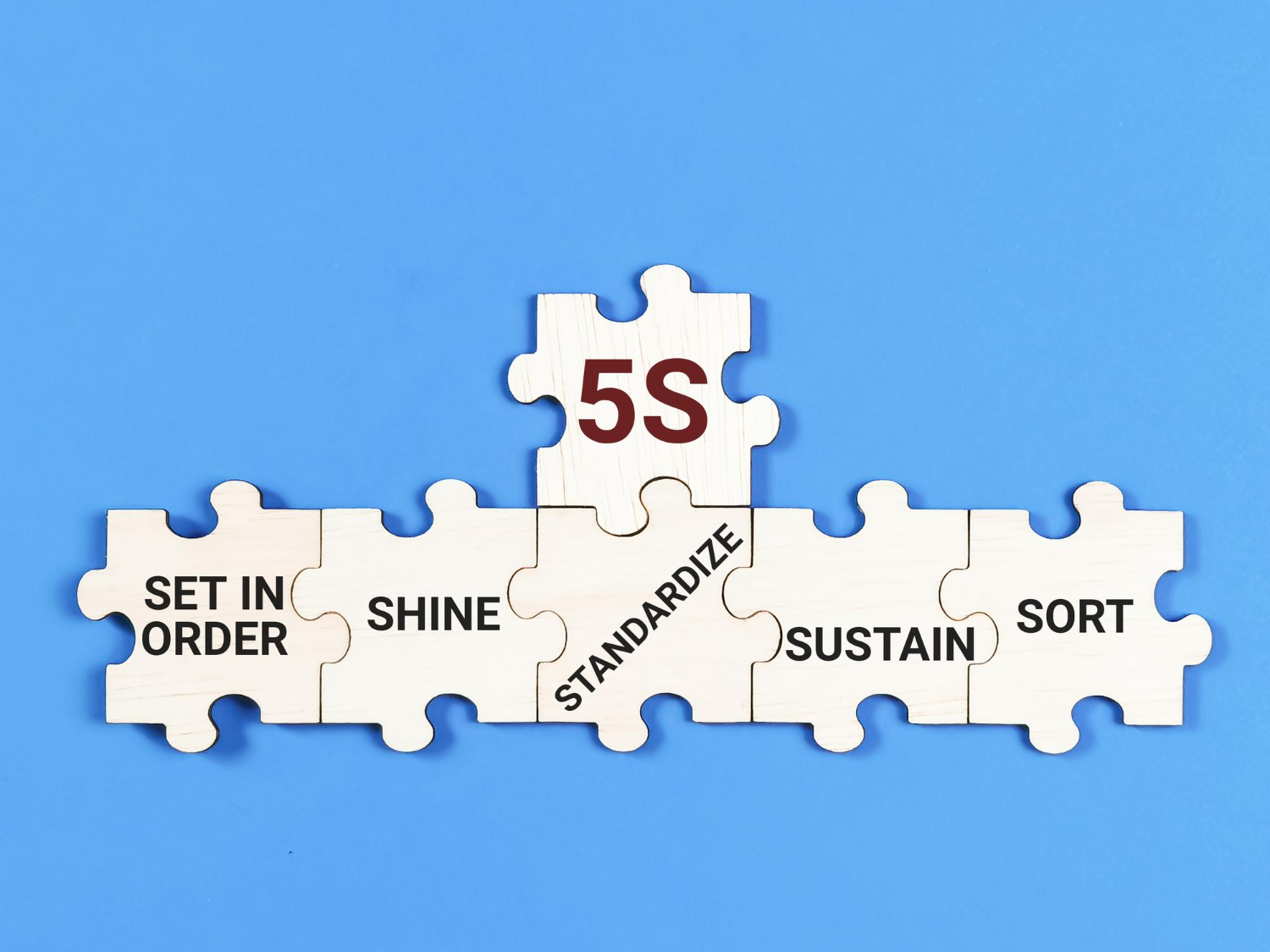
Without proper technical and cultural understanding, developed through training and people development, companies end up applying tools like 5S or Kanban superficially, losing the true purpose of Lean.
Taiichi Ohno took nearly 30 years to solidify the system because he was building both culture and people’s thinking capabilities. It is not about copying tools, but developing the ability to see Muda, Mura, and Muri and create countermeasures through Kaizen.
The myth that Lean “cuts people” also comes from leadership communication failures. TPS actually aims to free people from non-value-added activities so they can focus on more meaningful work, such as Kaizen itself.
In my 21 years as a Lean consultant, there was never a layoff caused by Lean implementation. People who were no longer needed in certain processes were reassigned and developed to become multipliers and disseminators of Lean Culture.
Therefore, the “worst company” to implement Lean is the one that:
- Has uncommitted leadership (Muri) that does not dedicate itself to Hoshin Kanri and is unwilling to change its mindset
- Has a culture that resists Kaizen and learning, seeing Lean only as a set of cost-cutting tools
- Does not spend time at the Genba and prefers to manage through reports instead of observing real flow
Lean/TPS implementation does not fail because of the sector, company size, or nationality.
It fails because of poor management of cultural change and lack of genuine leadership involvement at all levels.
There is no “worst company” for implementing Lean. There is only the worst leadership and the worst culture, and these factors directly influence the success or failure of a Lean transformation.
Gerson Damiani
Gerson Damiani is a mechanical engineer with a postgraduate degree in Business Administration for Engineers and more than 16 years of experience at Toyota Brazil, where he worked in several production areas including die casting, heat treatment, machining, assembly, and press operations. A specialist in Lean systems and value stream flow improvement, he has extensive experience in standardized work, pull systems, lead time reduction, Kaizen Teian implementation, and TPM. He currently leads and manages operational transformations across the United States, Mexico, and South America, connecting fundamental Lean practices with daily operations and the development of leaders and teams.
Additional Links
Visit the Honsha website:
https://honsha.org/?noredirect=true
Explore other articles about Lean and Toyota at Honsha:
https://honsha.org/blog/